Automotive electronic systems
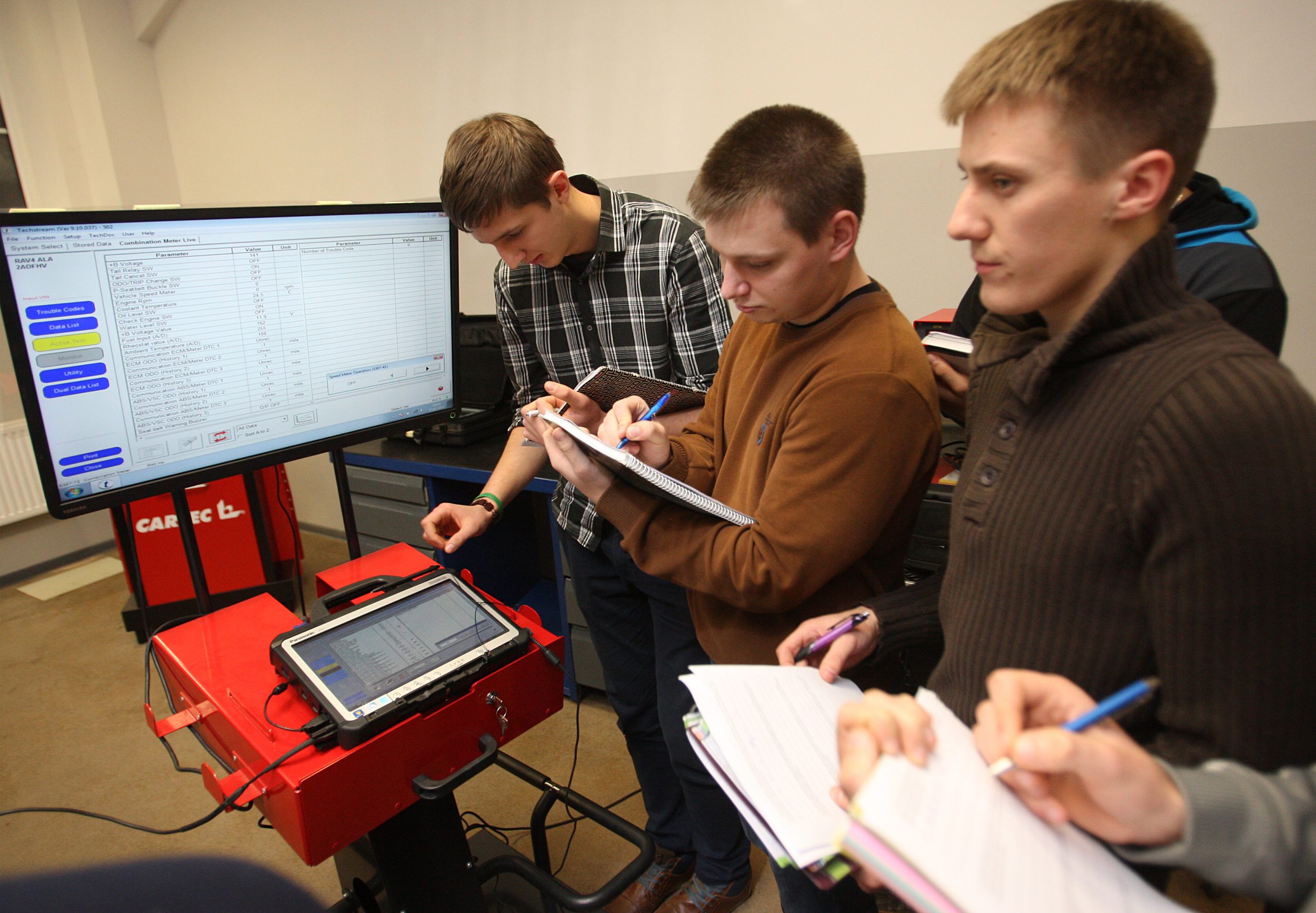
| Automotive electronic systems | |
| State code | 6531EX024 |
| Faculty | Technical Faculty |
| Study field | Electronic Engineering |
| Qualification | Professional Bachelor of Engineering Sciences |
| Form and duration of studies | Full-time studies, 3 years Part-time studies 4 years |
| Credits | 180 |
| Study plans | Full-time studies Fill-time (session) studies plan Degree Course 2026 – 2029 Full – time study plan Degree Course 2023 – 2025 Part – time study plan Degree Course 2023 – 2025 |
Career Prospects:
Graduates of the Automotive Electronic Systems study programme may pursue professional careers in the fields of automotive electronics, diagnostics, and transport technologies in Lithuania and abroad. They can work as automotive electronics engineers, diagnostic specialists, maintenance or repair specialists in transport maintenance companies, automotive service centers, vehicle fleet operating companies, as well as in automotive manufacturing or component development companies. Graduates may work with hybrid and electric vehicle systems and diagnostic equipment, design and maintain automotive electronic systems in manufacturing companies, manage divisions of companies operating in this field, or establish their own business.
Learning Outcomes
You will be able to:
- professionally design automotive electronic systems;
- install, maintain and repair automotive electronic systems;
- manage companies providing these services;
- plan the activities of the enterprise/department and analyse the performance of the enterprise/department;
- solve engineering problems, model these problems, understand and interpret the results;
- evaluate engineering solutions from an ethical, social, economic and safety perspective;
- organise and carry out diagnostics, maintenance and troubleshooting of automotive electrical and electronic systems, based on knowledge of electromechanics, electrical, electronic and automation devices, their structure, principles of operation and parameterisation;
- select devices and their characteristics for automotive electronic systems;
- diagnose faults in automotive electrical and electronic systems, determine their causes, and select and use modern diagnostic and measurement equipment to troubleshoot faults;
- tune and adjust electronic control equipment indicators, basic technical parameters and performance of vehicles, calculate basic technical parameters of automotive units;
- analyse and evaluate the types of alternative energy accumulation sources, their application technologies, their characteristics and perform the necessary technical and economic calculations;
- perform debugging and adjustment work on electronic systems;
- troubleshoot power supply faults and their causes, select measuring instruments, analyse structural and principle diagrams;
- understanding of electrical and electronic circuits, their principles of operation and selection of working models;
- understand the specifics of adjacent engineering fields, which will help me to take a broader view of electronic engineering problems;
- to participate in teamwork and to communicate effectively and responsibly with professionals in other professional fields;
- to implement electronic engineering projects in the context of the circular economy, artificial intelligence and the digitisation of industry.
Full-time studies Fill-time (session) studies plan
Degree Course 2026-2029
| 1st semester (30 credits) | ||
| Compulsory courses | Credits | Evaluation* |
| Professional Communication | 3 | P |
| Foreign Language (English) | 3 | P |
| Mathematics | 6 | E |
| Physics | 3 | P |
| Engineering Graphics | 6 | P |
| Automobile Construction | 6 | E |
| Alternatyve subject | Credits | Evaluation* |
| Sustainable Development | 3 | E |
| Psychology | 3 | E |
| 2nd semester (30 credits) | ||
| Compulsory courses | Credits | Evaluation * |
| Foreign Language (English) | 3 | E |
| Physics | 3 | E |
| Applied Programs | 3 | P |
| Circuit Analysis | 6 | E |
| Engineering mechanics | 3 | P |
| Analogue and Digital Devices | 6 | E |
| Technological 1 (teaching practice) | 6 | P |
| 3rd semester (30 credits) | ||
| Compulsory courses | Credits | Evaluation * |
| Law | 3 | E |
| Electrotechnical Materials | 3 | P |
| Electronics | 3 | P |
| Electrical and Electronic Devices and Management | 6 | E |
| Electrical Measurements | 4 | E |
| Technological 2 (teaching practice) | 6 | P |
| Free elective courses** | Credits | Evaluation * |
| Elective courses 1 | 5 | P |
| 4th semester (30 credits) | ||
| Compulsory courses | Credits | Evaluation * |
| Human and Civil Safety | 3 | E |
| Artificial intelligence systems | 3 | P |
| Internal Combustion Engines and Their Electronics | 4 | E |
| Microprocessors and Controllers | 6 | E |
| Basics of Programming | 3 | E |
| Technological 3 (teaching practice) | 6 | P |
| Free elective courses** | Credits | Evaluation * |
| Elective courses 2 | 5 | P |
| 5th semester (30 credits) | ||
| Compulsory courses | Credits | Evaluation * |
| Data Communications Systems | 3 | E |
| Engineering Economics | 3 | P |
| Applied Research | 3 | P |
| Electronics of Engine Management Systems | 6 | E |
| Hybrid and Electric Drive Automobiles Electronic Systems | 3 | E |
| Diagnostic Systems | 6 | P |
| Production Practice | 6 | P |
| 6th semester (30 credits) | ||
| Compulsory courses | Credits | Evaluation * |
| Engineering Economics | 3 | E |
| Smart Technologies in Automobiles | 3 | E |
| Autonomous Vehicles | 3 | E |
| Safety and Comfort Systems | 3 | E |
| Final Practice | 6 | P |
| Final Project | 12 | P |
*Evaluation :
E – exam,
P – project.
** Students are free to choose their Free elective courses from those offered by Vilniaus kolegija/HEI. Each study programme includes Free elective courses in the relevant semesters.
Full -time studies plan
(for entrants in 2023 – 2025)
| 1st semester (30 credits) | ||
| Compulsory subject | Credits | Evaluation* |
| Mathematics | 6 | E |
| Physics | 6 | E |
| Automobile Construction | 6 | E |
| Applied Mechanics | 3 | D |
| Applied Programs | 3 | D |
| Foreign Language (English) | 3 | D |
| Electrotechnical Materials | 3 | D |
| 2 nd semester (30 credits) | ||
| Compulsory subject | Credits | Evaluation * |
| Physics | 3 | E |
| Circuit Analysis | 6 | E |
| Educational Practice | 6 | D |
| Contemporary Lithuanian | 3 | D |
| Engineering Graphics | 6 | D |
| Foreign Language (English) | 3 | E |
| Alternative Subjects | Credits | Evaluation * |
| Sociology | 3 | E |
| Sustainable Development | 3 | E |
| Psychology | 3 | E |
| 3 nd semester (30 credits) | ||
| Compulsory subject | Credits | Evaluation * |
| Electronics and Automatics | 6 | D |
| Analogue and Digital Devices | 6 | E |
| Electrical Measurements | 3 | D |
| Technological 1 Practice | 6 | D |
| Applied Research | 3 | D |
| Basics of Programming | 3 | D |
| Optional subject** | Credits | Evaluation * |
| Automotive Maintenance | 3 | D |
| Science Workshop Project | 3 | D |
| Sustainable Transport | 3 | D |
| 4 th semester (30 credits) | ||
| Compulsory subject | Credits | Evaluation * |
| Internal Combustion Engines and Their Electronics | 3 | E |
| Data Communications Systems | 3 | E |
| Project Management | 3 | D |
| Microprocessors and Controllers | 6 | E |
| Diagnostic Systems | 6 | D |
| Technological 2 Practice | 6 | D |
| Sustainable Environment and Human Safety | 3 | E |
| 5th semester (30 credits) | ||
| Compulsory subject | Credits | Evaluation* |
| Electrical and Electronic Devices and Management | 6 | E |
| Electronics of Engine Management Systems | 6 | E |
| Hybrid and Electric Drive Automobiles Electronic Systems | 3 | E |
| Production Practice | 6 | D |
| Law | 3 | E |
| Engineering Economics | 3 | D |
| Optional Subject** | Credits | Evaluation * |
| Technical Inspection | 3 | D |
| Interdisciplinary Project | 3 | D |
| Traffic Engineering | 3 | D |
| 6 th semester (30 credits) | ||
| Compulsory subject | Credits | Evaluation * |
| Final Practice | 6 | E |
| Final Project | 12 | D |
| Engineering Economics | 3 | E |
| Active and Passive Safety Systems | 3 | E |
| Safety and Comfort Systems | 3 | E |
| Optional subject** | Credits | Evaluation * |
| Robotics | 3 | D |
| Alternative Energy Sources for Cars | 3 | D |
| Electronic Control Unit Reprogramming of Automobile | 3 | D |
** Optional subjects are freely selectable subjects from the list of predefined subjects.
*Evaluation :
E – exam;
D – independent study projects
Part-time studium
(for entrants in 2023 – 2025)
| 1 st semester (22 credits) | ||
| Compulsory subject | Credits | Evaluation * |
| Contemporary Lithuanian | 3 | D |
| Mathematics | 4 | D |
| Physics | 6 | E |
| Applied Mechanics | 3 | D |
| Electrotechnical Materials | 3 | D |
| Applied Programs | 3 | D |
| 2 nd semester (23 credits) | ||
| Compulsory subject | Credits | Evaluation* |
| Mathematics | 2 | E |
| Physics | 3 | E |
| Educational Practice | 6 | D |
| Engineering Graphics | 6 | D |
| Foreign Language (English) | 3 | D |
| Alternative subject | Credits | Evaluation * |
| Sociology | 3 | E |
| Sustainable Development | 3 | E |
| Psychology | 3 | E |
| 3 nd semester (22credits) | ||
| Compulsory subject | Credits | Evaluation * |
| Automobile Construction | 4 | D |
| Circuit Analysis | 6 | E |
| Electronics and Automatics | 3 | D |
| Analogue and Digital Devices | 3 | D |
| Electrical Measurements | 3 | D |
| Foreign Language (English) | 3 | E |
| 4 th semester(23 credits) | ||
| Compulsory subject | Credits | Evaluation * |
| Project Management | 3 | D |
| Automobile Construction | 2 | E |
| Electronics and Automatics | 3 | D |
| Analogue and Digital Devices | 3 | E |
| Applied Research | 3 | D |
| Technological 1 Practice | 6 | D |
| Sustainable Environment and Human Safety | 3 | E |
| 5 th semester (22 credits) | ||
| Compulsory subject | Credits | Evaluation* |
| Data Communications Systems | 3 | E |
| Technological 2 Practice | 6 | D |
| Diagnostic Systems | 4 | D |
| Internal Combustion Engines and Their Electronics | 3 | E |
| Electronics of Engine Management Systems | 3 | D |
| Optional subject** | Credits | Evaluation* |
| Automotive Maintenance | 3 | D |
| Science Workshop Project | 3 | D |
| Sustainable Transport | 3 | D |
| 6 th semester (23 credits) | ||
| Compulsory subject | Credits | Evaluation* |
| Microprocessors and Controllers | 3 | D |
| Production Practice | 6 | D |
| Law | 3 | E |
| Diagnostic Systems | 2 | D |
| Internal Combustion Engines and Their Electronics | 3 | E |
| Basics of Programming | 3 | E |
| Optional subject** | Credits | Evaluation * |
| Technical Inspection | 3 | D |
| Interdisciplinary Project | 3 | D |
| Traffic Engineering | 3 | D |
| 7 th semester (22 credits) | ||
| Compulsory subject | Credits | Evaluation * |
| Microprocessors and Controllers | 3 | E |
| Electrical and Electronic Devices and Management | 4 | D |
| Hybrid and Electric Drive Automobiles Electronic Systems | 3 | E |
| Engineering Economics | 3 | D |
| Active and Passive Safety Systems | 3 | E |
| Safety and Comfort Systems | 3 | E |
| Optional subject** | Credits | Evaluation* |
| Robotics | 3 | D |
| Alternative Energy Sources for Cars | 3 | D |
| Electronic Control Unit Reprogramming of Automobile | 3 | D |
| 8 th semester (23 credits) | ||
| Compulsory subject | Credits | Evaluation * |
| Electrical and Electronic Devices and Management | 2 | E |
| Engineering Economics | 3 | E |
| Graduation Practice | 6 | D |
| Graduation Thesis | 12 | D |
** Optional subjects are freely selectable subjects from the list of predefined subjects.
*Evaluation:
E – exam;
D – independent study projects.