Electrical and Automation Engineering
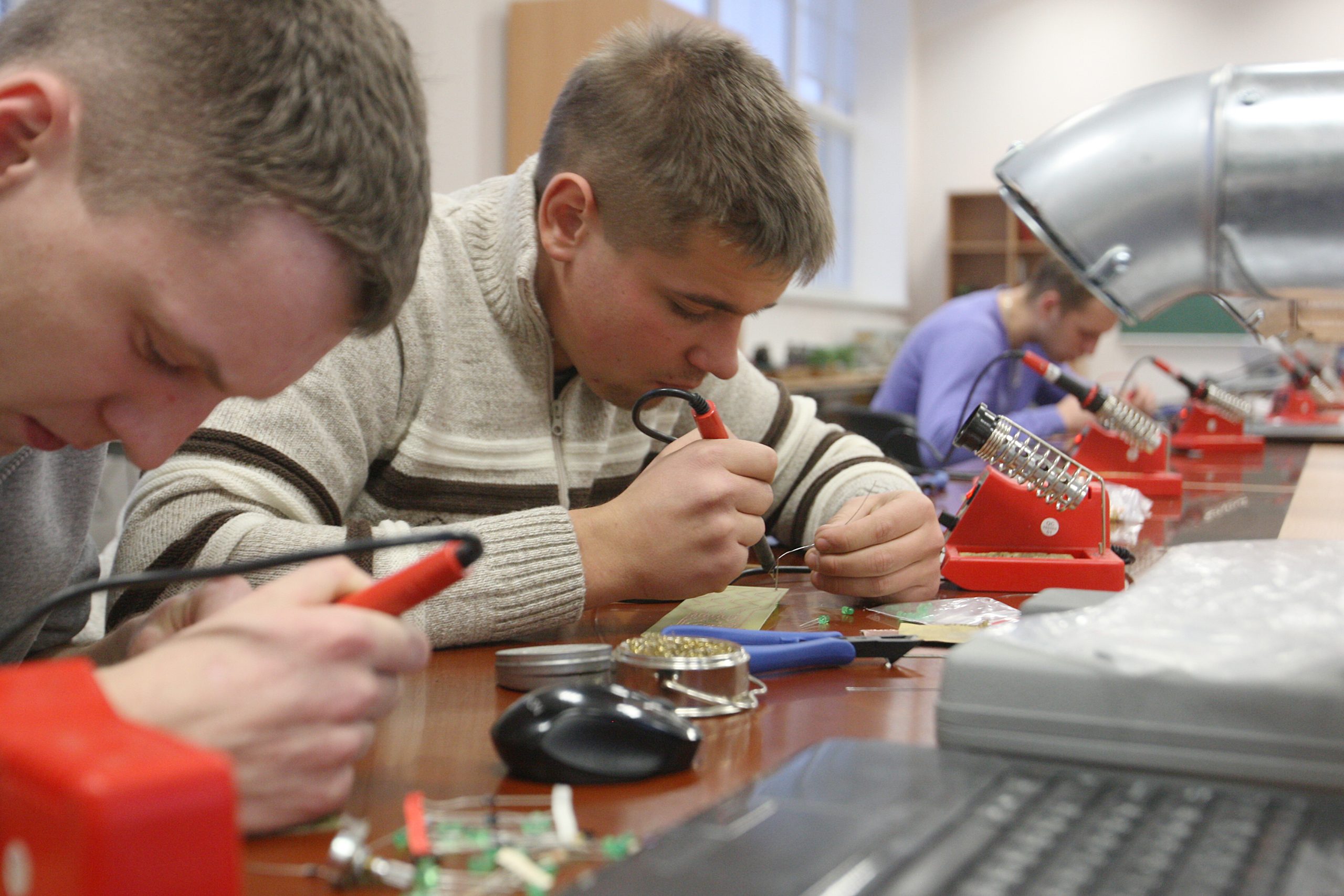
| Electrical and Automation Engineering | |
| State Code | 6531EX023 |
| Place | Technical Faculty |
| Study Field | Electrical Engineering |
| Qualification degree | Professional Bachelor of Engineering Sciences |
| Mode of Study and Duration | Full-time 3 years, Part-time 4 years |
| Credit Volume | 180 ETCS |
| Study Plan | Full-time studies Fill-time (session) studies plan Degree Course 2026 Full –time study plan Degree Course 2023 – 2025 Part-time study plan Degree Course 2023 – 2025 |
Professional Opportunities
An electrical and automation engineering specialist can work in Lithuanian or foreign electrical engineering companies that design, modernise or operate automated equipment and automation systems. An electrical and automation engineer can be a manager of a company’s department or a manager in his or her own business.
Study Programme Outcomes
Graduates are expected to be able to:
- design, install, operate, solve professional problems in the field of electrical engineering under competitive market conditions;
- apply knowledge of fundamental engineering sciences, understand the principles of operation of electrical, electromechanical and electronic equipment and solve design, installation and operation problems, evaluating scientific and technological achievements;
- investigate, compare and evaluate the performance of energy converters, control devices, automation equipment, applying appropriate techniques and methodologies to make measurements;
- design electrical networks and systems;
- analyse the reliability of electricity supply;
- programming controllers, designing automated control systems and their functional devices;
- find optimal solutions for production automation;
- identify emerging problems and plan strategies to solve them;
- operate automation and mechatronics technologies and apply them in practice;
- interpret data obtained from the installation, operation and repair of electrical engineering equipment and measurements;
- evaluate engineering solutions from an ethical, social, economic and safety perspective;
- apply information technology and basic software to solve engineering problems, obtain, process and manage the results of solutions;
- communicate effectively and responsibly and participate in teamwork;
- develop your professional knowledge independently;
- to analyse and argue critically and to debate orally, in writing or by other means of communication, working in a team.
Full-time studies Fill-time (session) studies plan
(for entrants in 2026)
| 1st semester (30 credits) | ||
| Compulsory courses | Credits | Evaluation* |
| Professional Communication | 3 | P |
| Mathematics | 6 | E |
| Physics | 6 | E |
| Electrical Measurements | 3 | P |
| Engineering Graphics | 6 | P |
| Foreign Language (English) | 3 | P |
| Alternative subject | Credits | Evaluation* |
| Sustainable Development | 3 | E |
| Psychology | 3 | E |
| 2nd semester (30 credits) | ||
| Compulsory courses | Credits | Evaluation* |
| Applied Programmes | 3 | P |
| Engineering Mechanics | 3 | P |
| Electrical Circuit Analysis | 6 | E |
| Electronics | 3 | E |
| Programming | 6 | P |
| Educational Practice | 6 | P |
| Foreign Language (English) | 3 | E |
| 3rd semester (30 credits) | ||
| Compulsory courses | Credits | Evaluation* |
| Human and Civil Safety | 3 | E |
| Basics of Automation Control | 7 | E |
| Electrotechnical Materials | 3 | P |
| Electrical Converters and Actuators | 6 | E |
| Technological 1 Practice | 6 | P |
| Free elective courses** | Credits | Evaluation* |
| Optional subject | 5 | P |
| 4th semester (30 credits) | ||
| Compulsory courses | Credits | Evaluation* |
| Power Electronics | 3 | E |
| Intelligent Electronic Devices and Controllers | 5 | E |
| Electrical Energetics | 3 | E |
| Artificial Intelligence Systems | 3 | P |
| Discrete Automatic Systems | 5 | E |
| Production Practice | 6 | P |
| Free elective courses** | Credits | Evaluation* |
| Optional subject | 5 | P |
| 5th semester (30 credits) | ||
| Compulsory courses | Credits | Evaluation* |
| Applied Research | 3 | P |
| Electrical and Automation Equipment | 6 | E |
| Design of Automation and Controls Systems | 6 | E |
| Smart Electrical Systems for Buildings | 6 | P |
| Engineering Economics | 3 | P |
| Technological 2 Practice | 6 | P |
| 6th semester (30 credits) | ||
| Compulsory courses | Credits | Evaluation* |
| Engineering Economics | 3 | E |
| Electrical Safety | 3 | E |
| Law | 3 | E |
| Robotics | 3 | E |
| Final Practice | 6 | P |
| Final Project | 12 | P |
*Evaluation :
E – exam,
P – project.
** Students are free to choose their Free elective courses from those offered by Vilniaus kolegija/HEI. Each study programme includes Free elective courses in the relevant semesters.
Full-time Study Plan
(for entrants in 2023 – 2025)
| 1st semester (30 credits) | ||
| Compulsory Subject | Credits | Evaluation* |
| Professional Language Culture | 3 | D |
| Mathematics | 6 | E |
| Physics | 6 | E |
| Electrical Measurements | 3 | D |
| Engineering Graphics | 6 | D |
| Foreign Language (English) | 3 | D |
| Alternative Subjects | Credits | Evaluation* |
| Sociology | 3 | E |
| Sustainable Development | 3 | E |
| Psichology | 3 | E |
| 2nd semester (30 credits) | ||
| Compulsory Subject | Credits | Evaluation* |
| Applied Programmes | 3 | D |
| Engineering Mechanics | 3 | D |
| Electrical Circuit Analysis | 6 | E |
| Electronics | 3 | E |
| Programming | 6 | D |
| Educational Practice | 6 | D |
| Foreign Language (English) | 3 | E |
| 3rd semester (30 credits) | ||
| Compulsory Subject | Credits | Evaluation* |
| Sustainable Environment and Human Safety | 3 | E |
| Basics of Automation Control | 6 | E |
| Power Electronics | 3 | E |
| Elektrotechnical Materials | 3 | D |
| Electrical Converters and Actuators | 6 | E |
| Technological Practice 1 | 6 | D |
| Optional subject** | Credits | Evaluation* |
| Electricity Market | 3 | D |
| Science Workshop Project | 3 | D |
| History of Energy | 3 | D |
| 4th semester (30 credits) | ||
| Compulsory Subject | Credits | Evaluation* |
| Microprocessors and Controllers | 6 | E |
| Electrical Energetics | 3 | E |
| Information Transmission Systems | 3 | D |
| Applied Research | 3 | D |
| Discrete Automatic Systems | 6 | E |
| Production Practice | 6 | D |
| Optional subject** | Credits | Evaluation* |
| Lighting Technology | 3 | D |
| Interdisciplinary Project | 3 | D |
| Biomass Energy | 3 | D |
| 5th semester (30 credits) | ||
| Compulsory Subject | Credits | Assessment* |
| Electrical and Automation Equipment | 6 | E |
| Electrical Safety | 3 | E |
| Design of Automation and Controls Systems | 6 | E |
| Building Systems Management | 3 | D |
| Project Management | 3 | D |
| Engineering Economics | 3 | D |
| Technological Practice 2 | 6 | D |
| 6th semester (30 credits) | ||
| Compulsory Subject | Credits | Evaluation* |
| Engineering Economics | 3 | E |
| Law | 3 | E |
| Mechatronic Systems | 3 | E |
| Final Practice | 6 | D |
| Final Thesis | 12 | D |
| Optional subject** | Credits | Evaluation* |
| Robotics | 3 | D |
| Lightning Protection | 3 | D |
| Modern Electrical Systems | 3 | D |
** Students choose a free elective subject from a list of available free electives.
* Evaluation:
E – exam;
D – independent work.
Part-time Study Plan
(for entrants in 2023 – 2025)
| 1st semester (22 credits) | ||
| Compulsory Subject | Credits | Evaluation* |
| Professional Language Culture | 3 | D |
| Mathematics | 4 | D |
| Physics | 3 | D |
| Applied Programmes | 3 | D |
| Educational Practice | 6 | D |
| Alternative Subjects | Credits | Evaluation* |
| Sociology | 3 | E |
| Sustainable Development | 3 | E |
| Psichology | 3 | E |
| 2nd semester (23 credits) | ||
| Compulsory Subject | Credits | Evaluation* |
| Mathematics | 2 | E |
| Physics | 3 | E |
| Engineering Mechanics | 3 | D |
| Elektrotechnical Materials | 3 | D |
| Engineering Graphics | 6 | D |
| Electrical Measurements | 3 | D |
| Foreign Language (English) | 3 | D |
| 3rd semester (22 credits) | ||
| Compulsory Subject | Credits | Evaluation* |
| Sustainable Environment and Human Safety | 3 | E |
| Electrical Circuit Analysis | 4 | D |
| Applied Research | 3 | D |
| Information Transmission Systems | 3 | D |
| Electronics | 3 | E |
| Programming | 3 | D |
| Foreign Language (English) | 3 | E |
| 4th semester (23 credits) | ||
| Compulsory Subject | Credits | Evaluation* |
| Electrical Circuit Analysis | 2 | E |
| Power Electronics | 3 | E |
| Electrical Safety | 3 | E |
| Basics of Automation | 3 | D |
| Programming | 3 | D |
| Technological Practice 1 | 6 | D |
| Optional subject** | Credits | Evaluation* |
| Electricity Market | 3 | D |
| Science Workshop Project | 3 | D |
| History of Energy | 3 | D |
| 5th semester (22 credits) | ||
| Compulsory Subject | Credits | Evaluation* |
| Microprocessors and Controllers | 3 | D |
| Electrical Energetics | 3 | E |
| Electrical Converters and Actuators | 4 | D |
| Basics of Automation | 3 | E |
| Production Practice | 6 | D |
| Optional subject** | Credits | Evaluation* |
| Lighting Technology | 3 | D |
| Interdisciplinary Project | 3 | D |
| Biomass Energy | 3 | D |
| 6th semester (23 credits) | ||
| Compulsory Subject | Credits | Evaluation* |
| Microprocessors and Controllers | 3 | D |
| Electrical Converters and Actuators | 2 | E |
| Electrical and Automation Equipment | 3 | D |
| Discrete Automatic Systems | 6 | E |
| Building Systems Management | 3 | D |
| Law | 3 | E |
| Optional subject** | Credits | Evaluation* |
| Robotics | 3 | D |
| Surge Protection | 3 | D |
| Modern Electrical Systems | 3 | D |
| 7th semester (22 credits) | ||
| Compulsory Subject | Credits | Evaluation* |
| Project Management | 3 | D |
| Design of Automation and Controls Systems | 4 | D |
| Electrical and Automation Equipment | 3 | E |
| Engineering Economics | 3 | D |
| Technological Practice 2 | 6 | D |
| Mechatronic Systems | 3 | E |
| 8th semester (23 credits) | ||
| Compulsory Subject | Credits | Evaluation* |
| Engineering Economics | 3 | E |
| Design of Automation and Controls Systems | 2 | E |
| Final Practice | 6 | D |
| Final Thesis | 12 | D |
** Students choose a free elective subject from a list of available free electives.
* Evaluationt:
E – exam;
D – independent work.