Technology of Photography
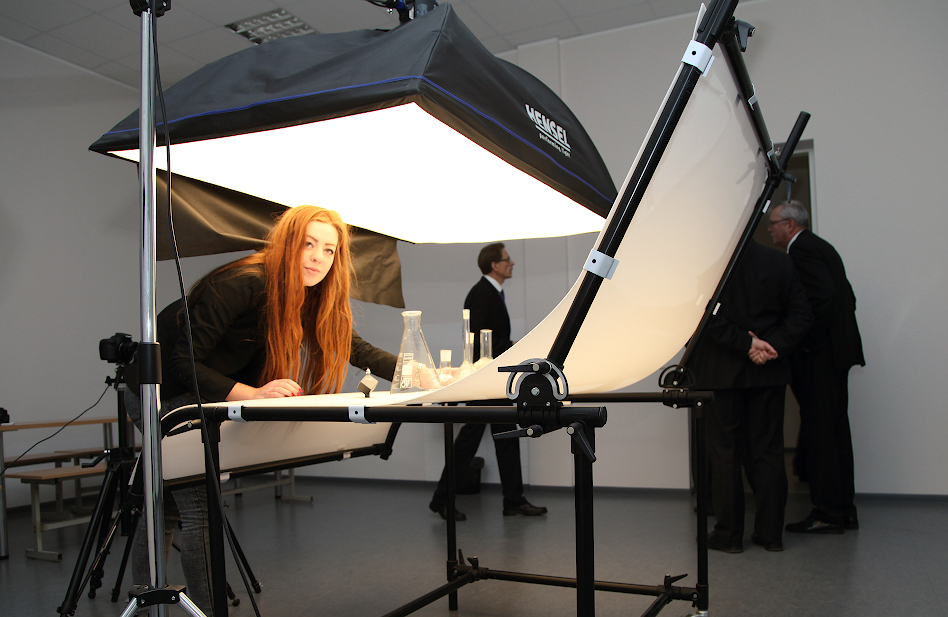
| TECHNOLOGY OF PHOTOGRAPHY | |
| State code | 6531PX010 |
| Faculty | Faculty of Arts and Design |
| Study field | Arts, Media Art |
| Qualification | Professional Bachelor of Arts |
| Form and duration of studies | Full-time studies, 3 years |
| Credits | 180 |
| Study plans | Degree Course 2026-2029 |
Career Prospects
Graduates will be able to work as photographers in mass media, advertising, publishing enterprises, digital laboratories, and other areas engaged in image production and output, or perform individual activities with a business license or under authorship agreements.
Graduates can continue their studies by selecting university study programmes in the field of Media Art studies.
Learning Outcomes
- Knowledge and its application. Students will know the main concepts of media art and areas of artistic directions (branches) historical development, and contemporary trends, and will be able to apply the knowledge in creative activities by generating artistic ideas; understand the specifics of specific media art direction and links with other artistic directions, creating media works and projects and media products; will apply knowledge from cultural, historical, economic, social and other contexts. They will be able to apply media art knowledge and demonstrate artistic skills in interdisciplinary studies, select ways of audiovisual, audio, or visual expression creatively, and use old and new technologies and equipment in creative processes and professional activities. They will know the peculiarities of creative business, the principles of media art projects, and apply them, implementing creative projects and creative strategies. They will know the requirements of health, safety at work, fire, and environmental protection related to the field of specific media art activities, and will be able to comply with them in practical activities.
- Abilities for research. Students will be able to evaluate media art phenomena critically and identify prevailing or topical trends, collecting, analyzing, and systematizing the information needed to address creative problems, and the results of art, research, and creative experiments; they will be able to perform media art study, summarize and apply its results, realizing creative ideas in the media art process. Using the results of the study, they will be able to select appropriate methods of solving creative problems, justify their selection, and draw conclusions.
- Special skills. Working independently or in collaboration in a professional and/or interdisciplinary environment, students will be able to generate ideas for media art projects, make creative proposals, and choose solutions. They will be able to select and apply means and methods of artistic expression, demonstrate technological skills, master emerging and changing media and technologies, and apply them in creative media art projects. Students will be able to experiment in the creative process in the field of specific media art, based on personal creative practices, intercultural and contemporary art insights, and the analysis of other media art creators’ activities. They will be able to present creative ideas and/or projects, using visual communication and information technologies in real and virtual space. They will be able to create a creative portfolio based on the principles of composition and media art concepts, in accordance with the technological requirements.
- Social skills. Students will be able to communicate with colleagues, potential customers and other representatives of society, implementing media works and projects. They will understand the relationship between media art creators and customers, users, co-authors, and collaborators, and will be able to comply with copyright protection, labor law, and ethical requirements when creating media artworks and projects and media products, implementing them and presenting them to the public. They will be able to communicate in oral and written form in the state language and at least one foreign language in professional activities and public spaces. Will be able to work in a team and collaborate, take responsibility for the quality and content of their own and subordinates’ work, and be guided by professional ethics and civic responsibility.
- Personal skills. Students will be able to study independently, solve creative problems, plan their activities, comply with the deadlines, and adapt to changing circumstances. Will understand moral responsibility for the results of their creative activities, their impact on society, the environment, and economic and artistic development. Will be able to learn independently and plan the learning process, critically evaluate personal creative activities, and understand the importance of lifelong learning.
Full-time studies
Degree Course 2026-2029
| 1st semester (30 credits) | ||
| Module (Subjects) | Credits | Evaluation |
| Composition | 4 | E |
| Colour Theory | 3 | E |
| Strategies of Photography | 4 | W |
| Graphic Editing 1 | 5 | W |
| Landscape, Architecture and Interior Photography | 8 | E |
| Introductory Practice | 3 | W |
| Free elective subjects (to select one) | ||
| Foreign Language (English) | 3 | W |
| Foreign Language (French) | 3 | W |
| Foreign Language (German) | 3 | W |
| 2nd semester (30 credits) | ||
| Sustainable Environment and Occupational Safety | 3 | W |
| Culturology | 5 | E |
| Fundamentals of Media | 3 | W |
| Graphic Editing 2 | 7 | E |
| Photo Equipment | 3 | W |
| Lighting Practice | 6 | W |
| Free elective subjects (to select one) | ||
| Foreign Language (English) | 3 | E |
| Foreign Language (French) | 3 | E |
| Foreign Language (German) | 3 | E |
| 3rd semester (30 credits) | ||
| History of Modern Art | 4 | E |
| Portrait Photography | 6 | E |
| Fundamentals of Shooting | 5 | E |
| Media Project Management | 3 | W |
| Fundamentals of Advertising Communication | 3 | W |
| Creative Practice | 6 | W |
| Free elective subjects (to select one) | 3 | W |
| 4th semester (30 credits) | ||
| History of Photography | 4 | E |
| Technology of Advertising Photography | 6 | E |
| Artificial Intelligence in Photography | 3 | W |
| Reportage Photography | 6 | W |
| Composition Practice | 3 | W |
| Professional Practice | 5 | W |
| Free elective subjects (to select one) | 3 | W |
| 5th semester (30 credits) | ||
| Special Technologies | 5 | W |
| Photography of Advertising Still-Life | 8 | E |
| Fashion Photography | 5 | E |
| Applied Research | 3 | W |
| Media Business Management | 3 | W |
| Free elective subjects (to select one) | 3 | W |
| Free elective subjects (to select one) | ||
| Professional Ethic | 3 | E |
| Sociology | 3 | E |
| Psychology | 3 | E |
| 6th semester (30 credits) | ||
| Photo Selection and Post-Production | 3 | W |
| Photography Art Project | 3 | W |
| Project Communication | 3 | E |
| Law | 3 | E |
| Final Practice | 7 | W |
| Final Thesis (Project) | 11 | D |
Free elective subjects are subjects that can be freely selected from the list of predefined subjects.
E – Exam, W – Independent work